5–15 Second Video Ads: A Simple Trailer Structure
Cinematic AI shorts are ultra-short, trailer-style videos designed for TikTok, Reels, and YouTube Shorts. The goal isn’t “a random AI clip” — it’s premium pacing + realism + micro-detail that looks intentional, branded, and rewatchable.
Why 5–15 seconds is the power zone for brand ads
Attention on social platforms is measured in fractions of a second. TikTok, Reels, and YouTube Shorts users are conditioned to scroll at the slightest hesitation. But here's the opportunity: a 5–15 second window is long enough to deliver a complete brand story, and short enough that a viewer who pauses will almost always watch the whole thing.
Platform data consistently shows that 6–15 second video ads outperform longer formats on completion rate and cost-per-result, precisely because they respect the viewer's time. When you make every second count, you win the algorithm and the audience.
The simple trailer structure that converts
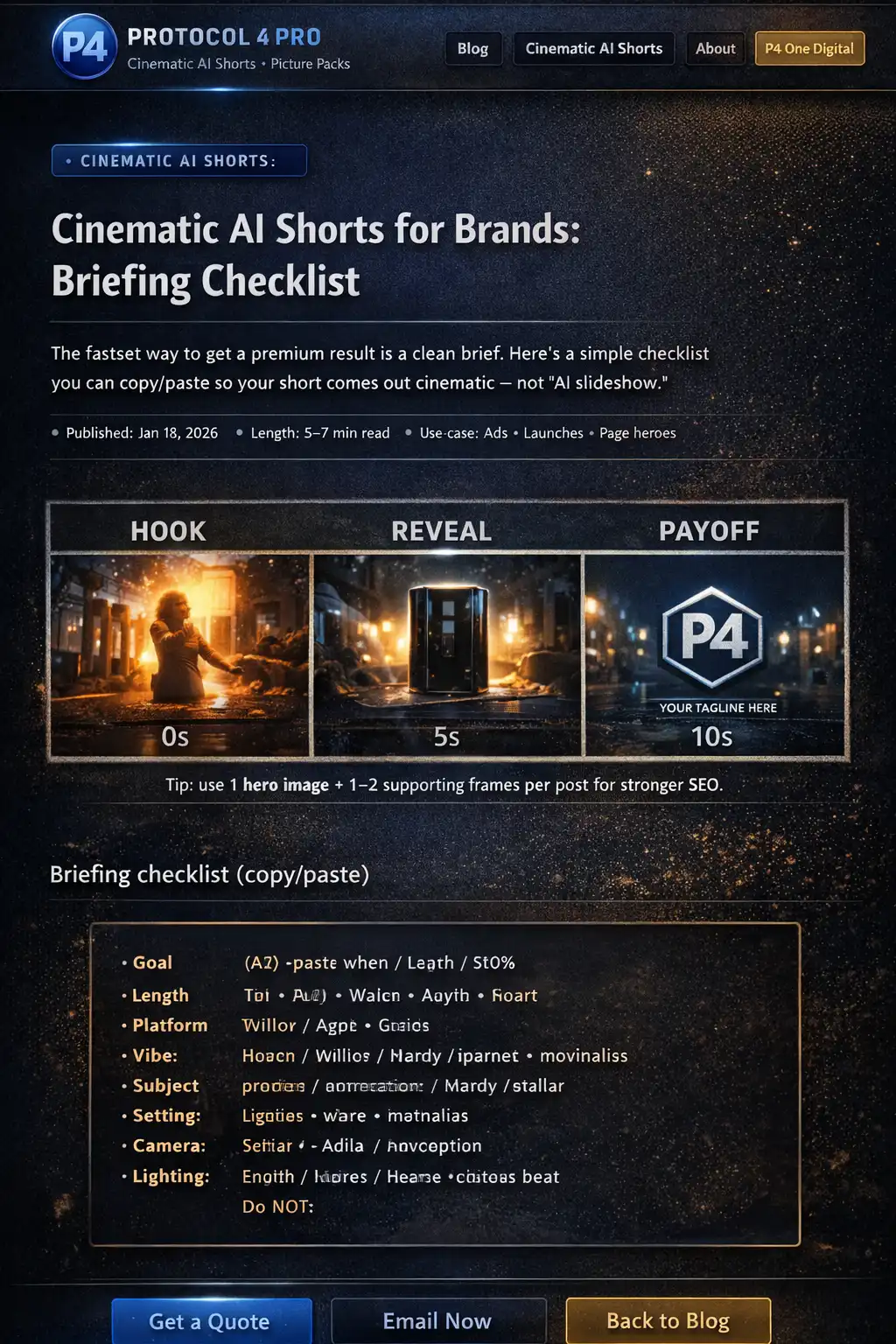
The highest-converting short-form video ads follow a pattern borrowed from movie trailers. Three beats, executed cleanly:
- 0–3s — The Hook: A strong visual or audio cue that earns the pause. Could be unexpected motion, a striking product shot, an emotional face, or a single provocative line of text. No slow intros. No logo first. Start in the middle of something interesting.
- 3–10s — The Core Reveal: Deliver the payload. Show the product, the transformation, or the core brand message. Keep pacing tight — cut on action, not after it. Avoid information overload: one message per ad, not five.
- 10–15s — The End Beat: A clean, satisfying close. Logo + tagline, a product reveal, a visual punchline, or a direct CTA. Make the ending feel like a complete thought, not a hard cut to black. This is where the brand impression lands.
This structure works because it mirrors how viewers already process content. They decide to keep watching in the first 2 seconds, they absorb the message in the middle, and they act (or remember) at the end. Fighting that pattern loses; using it wins.
What separates "cinematic" from generic
Most brands upload mediocre clips and wonder why they don't perform. The difference between an ad that scrolls past and one that stops thumbs comes down to a handful of technical choices:
- Lighting quality: Clean, readable subjects. Controlled highlights. No muddy dark areas or blown-out whites. Premium lighting signals premium product — instantly and subconsciously.
- Intentional camera movement: Push-ins, orbits, tracking shots, or subtle micro-shake — movement that looks directed, not accidental. Random camera motion reads as amateur; deliberate motion reads as editorial.
- Sound design: A beat drop, a satisfying sound effect, or a piece of music timed to the cut can triple retention. Silence or generic music actively hurts performance.
- Micro-detail and texture: Particles, reflections, fabric movement, steam, depth-of-field blur — these details create the "expensive" feeling that makes viewers associate quality with your brand.
- Aspect ratio discipline: 9:16 for TikTok/Reels, 16:9 for YouTube pre-roll, 1:1 for feed ads. One master cut, adapted correctly per platform, not cropped awkwardly.
Best practices for brand use-cases
Short-form video ads are not one-size-fits-all. The approach changes by goal:
- Product launch / awareness: Lead with the product in motion. Let the visual quality carry the message. No voiceover required — the look IS the ad.
- Direct response / conversion: Add a text overlay CTA that appears in the final 3 seconds. Clear, direct, single action: "Book a call," "Shop now," "Get a quote."
- Brand identity / organic content: Prioritize aesthetic consistency over hard CTAs. Use the same color grade, vibe, and pacing across all posts. Repetition builds brand recognition faster than a single viral video.
- Retargeting: Shorter is better — 5–7 seconds for warm audiences. They already know who you are; just show the product and the next step.
Protocol 4 Pro delivery note:
Every cinematic short we produce is briefed against a specific platform and goal. We don't hand you a generic clip — we deliver a correctly formatted, platform-ready asset (9:16, 16:9, or 1:1) with the pacing and end beat tuned to your use-case. Brief us with the vibe, length, and objective; we handle everything else.
How Protocol 4 Pro produces 5–15 second video ads
We use a combination of AI-generated video, editorial compositing, and deliberate sound design to produce cinematic shorts that look like they cost ten times what they do. Here's the workflow:
- Brief intake: We gather goal, length, vibe, subject, camera direction, and brand references.
- Concept + structure: A simple 3-beat structure is mapped before any rendering begins.
- Generation + grade: Motion, lighting, and texture are generated and then graded to match brand palette and platform requirements.
- Sound + timing: Beats, effects, and music are added and synced to cuts — not layered on after.
- Delivery: Platform-native files delivered with naming conventions and aspect ratio variants as needed.
Typical turnaround is 1–3 business days per asset. Volume pricing is available for brands running ongoing content calendars.
Common mistakes to avoid
- Starting with a logo: Nobody stops scrolling for a logo. Lead with the content, end with the brand.
- Too many messages: One ad, one message. "We're affordable, fast, high-quality, and local" in 10 seconds = zero message retained.
- Skipping sound: 80%+ of Reels and TikTok videos are watched with sound on. Sound design is not optional.
- Wrong aspect ratio: A landscape video uploaded to Reels will have black bars and look unprofessional before a single frame plays.
- No end beat: Cutting straight to black after the main clip leaves no brand impression. Always close with a clear visual moment.